Trustworthy Ecommerce Product Images: What Makes Them Reliable?
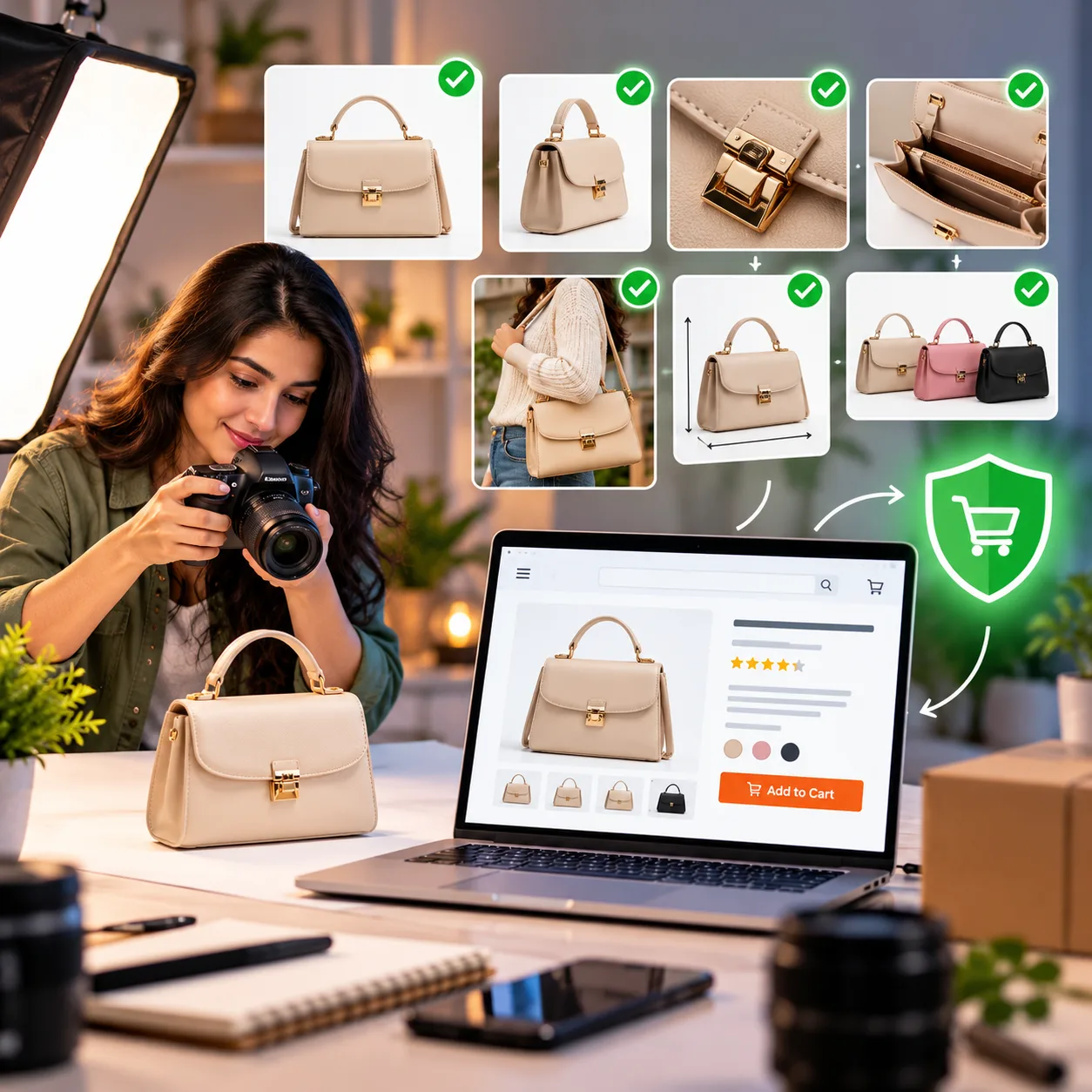
What Makes an Ecommerce Product Image Look Trustworthy?
When customers shop online, they cannot touch a product, check its quality in person, or see how it looks under normal lighting. They depend on product images to decide whether an item looks genuine, useful, and worth buying.
A good ecommerce product image does more than show what an item looks like. It helps customers feel confident about what they are purchasing. If an image looks unclear, heavily edited, or misleading, shoppers may hesitate even when the product itself is good.Trustworthy ecommerce product images help online shoppers evaluate product quality, colors, textures, and details before making a purchase. Since customers cannot touch or inspect products in person, clear and realistic images help them understand what they are buying and make more confident purchasing decisions.
Here are the main things that make an ecommerce product image look trustworthy.
1. Show the Product Clearly
Customers should be able to understand what they are looking at without zooming in repeatedly or guessing what the product looks like.
Use sharp images that show the product's shape, color, texture, and important details. Avoid blurry photos, distracting backgrounds, or lighting that hides key features.
For example, if you are selling a leather wallet, customers should be able to see its stitching, pockets, material, and overall finish.
The goal is simple: make it easy for customers to understand the product before they buy it.
2. Use Accurate Colors and Natural Lighting
Product images should represent the actual item as closely as possible. If a product appears bright white in the image but arrives in a cream shade, customers may feel misled.
Natural-looking lighting helps show colors and textures more accurately. Avoid filters or excessive color adjustments that change the product's appearance.
You do not always need expensive photography equipment. A clean setup near a window, balanced lighting, and careful editing can produce good results.
3. Choose a Clean, Consistent Background
A distracting background can take attention away from the product. A simple background helps customers focus on the item and understand its shape more easily.
White or light-colored backgrounds work well for many ecommerce product listings, particularly on marketplaces. Lifestyle backgrounds can also be effective when they show how a product fits into everyday life.
For example, a plain background may work best for a phone case, while a photograph of someone using a backpack can help shoppers understand its size and practical use.
Choose a background that supports the product rather than competing with it.
4. Show Multiple Angles and Important Details
One photograph rarely answers every question a customer may have.
Include additional images that show the product from different angles, along with close-ups of important features. Depending on the item, you might show its dimensions, material, controls, packaging, or how it is used.
For clothing, useful images may show the front, back, fabric, and fit. For electronics, customers may want to see ports, buttons, accessories, and the overall design.
The more clearly your images answer reasonable product questions, the less customers need to rely on assumptions.
5. Avoid Overediting and Misleading Effects
Editing can improve product photographs, but too much editing can reduce trust.
Removing dust, correcting exposure, and cleaning up the background are generally useful adjustments. Changing the product's proportions, hiding defects, exaggerating its color, or adding features it does not have can create unrealistic expectations.
Customers should receive a product that matches what the images led them to expect.
A polished image is valuable, but an honest image is more valuable in the long run.
6. Keep Product Images Consistent
A professional online store usually follows a consistent visual style across its listings.
Try to maintain similar lighting, image quality, backgrounds, framing, and spacing. This makes the store feel organized and helps customers compare products more easily.
Consistency does not mean every image must look identical. Lifestyle images and detail shots can add variety while still following the store's overall visual style.
Even small improvements in consistency can make a product catalog look more professional.
7. Show the Product in Real-Life Use
Customers often want to know how a product will look or work in their own lives.
Lifestyle images can help answer that question. A water bottle shown beside a gym bag, a lamp displayed on a bedside table, or a backpack worn by a person gives customers useful context.
However, these images should accurately represent the product's real size, appearance, and function. Avoid props or visual effects that suggest accessories are included when they are not.
A good lifestyle image helps shoppers imagine using the product without creating confusion about what they will receive.
8. Use High-Quality Images That Work on Mobile
Many customers browse ecommerce stores on their phones. If product images look pixelated, load poorly, or hide important details on a small screen, the shopping experience suffers.
Use sufficiently high-resolution images and export them in an appropriate file format and size. Keep the product easy to see, even when the image is displayed in a smaller listing thumbnail.
It is also worth checking how images appear on both desktop and mobile devices before publishing them.
9. Make Background Removal Look Natural
Removing a background can help create clean, consistent product images. It is especially useful when preparing photos for marketplaces, catalogs, advertisements, or online stores.
However, poor background removal can make a product look artificial. Rough edges, missing parts, strange outlines, and unnatural shadows can reduce confidence.
When removing a background, pay attention to fine details such as hair, transparent materials, glass edges, and soft shadows. Make sure the product still looks realistic after editing.
Tools such as PixCutly can help simplify background removal and prepare product images for different ecommerce uses. Always review the final result to ensure that important product details remain intact.
10. Make Sure Every Image Matches the Product Description
Trust comes from consistency between what customers see and what they read.
If the description says a bag is made from canvas, the images should not make it appear to be leather. If a product is sold in a specific size or color, the photographs should represent that version accurately.
Check that image variants, product descriptions, dimensions, and included accessories all match.
When images and descriptions tell the same story, customers can make more informed decisions.
Common Mistakes That Make Ecommerce Images Look Untrustworthy
Before publishing product images, check for these common problems:
Blurry or low-resolution photographs.
Colors that do not match the actual product.
Harsh shadows or uneven lighting.
Distracting backgrounds and unnecessary props.
Excessive retouching or unrealistic effects.
Missing angles or important product details.
Visible edges or artifacts after background removal.
Inconsistent image styles across product listings.
Fixing these issues can improve the overall shopping experience without requiring a complete photography setup.
Final Thoughts
A trustworthy ecommerce product image is clear, accurate, realistic, and consistent. It shows customers what they can expect rather than simply making a product look attractive.
Start with good lighting, a clean background, accurate colors, and sharp photographs. Add useful angles, close-up details, and lifestyle images where they help customers understand the product.
You do not need a professional studio for every listing. You need images that answer customers' questions and represent your products honestly.
When customers can clearly see what they are buying, they have a stronger foundation for making confident purchasing decisions.